
Honoring a Visionary Scholar: Celebrating Dr. Karen Mapp & 25 Years of Family Power
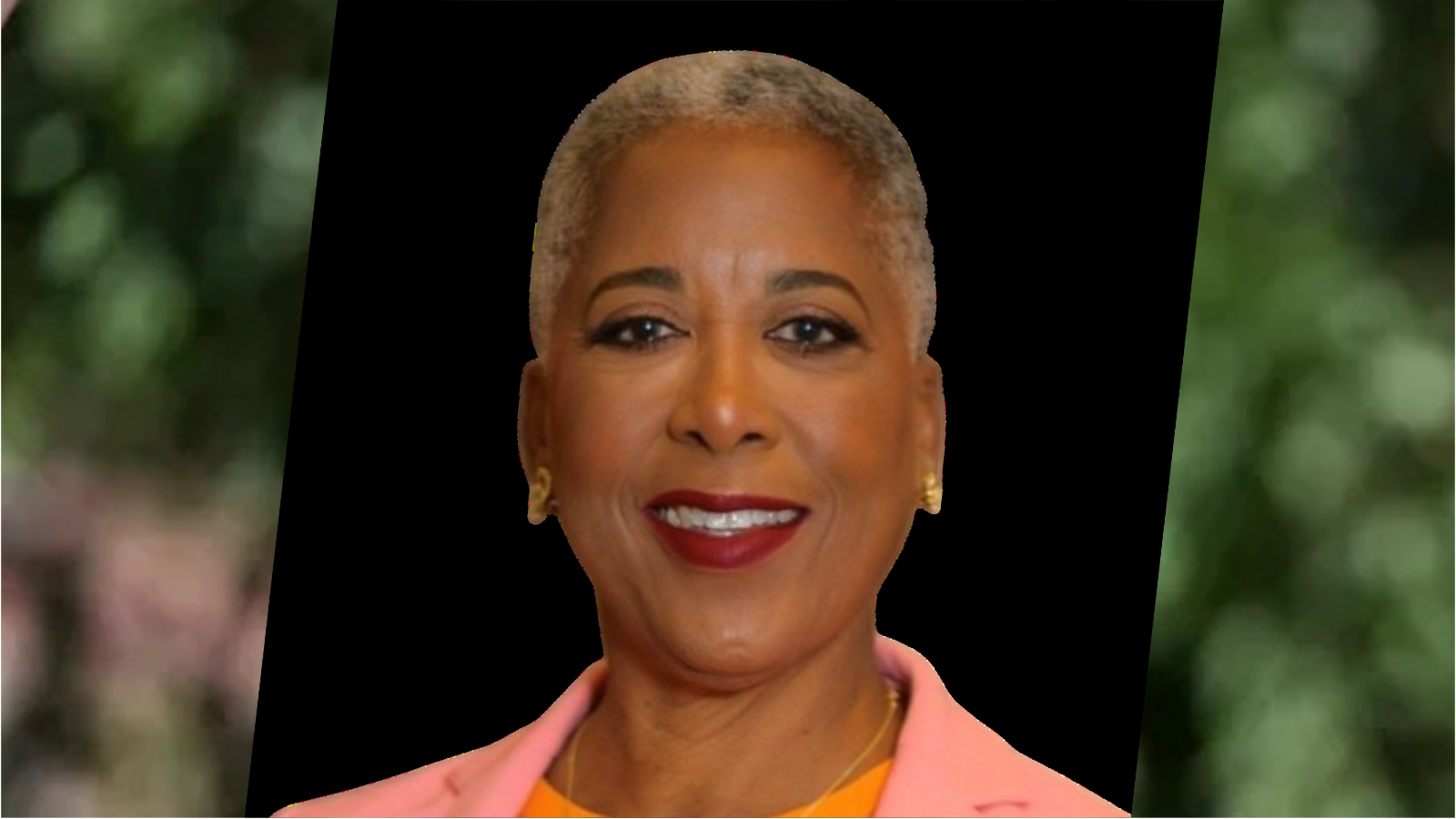
Families In Schools (FIS) is celebrating its 25th anniversary this year, including a benefit gala on June 3, 2026, that will honor several individuals who embody FIS’s mission. As we lead up to our gala in June, FIS will be releasing one profile every week on each of our gala’s honorees to celebrate their leadership stories and demonstrate how they honor the spirit of their award.
For the third of our recipients, Families In Schools is honored to present the Visionary Scholar Award to Karen L. Mapp, Ed.D. This award honors a nationally recognized scholar whose research, vision, and leadership have shaped the field of family engagement and elevated the role of families in education. Through groundbreaking scholarship and a deep commitment to equity, this honoree has helped transform how educators, systems, and policymakers understand family power—leaving a lasting imprint on the movement for educational justice.
Dr. Mapp is a leading researcher and practitioner in the field of family engagement, a professor at the Harvard Graduate School of Education, and co-author of Beyond the Bake Sale: The Essential Guide to Family-School Partnerships—with a 20th anniversary edition due in 2027.
“Dr. Mapp has helped educators and education leaders understand that family engagement is a powerful research-based strategy for improving student outcomes—and that it requires building the knowledge and skills of both educators and parents to work together as true partners. That is what FIS works to put into action as the foundation of all our work,” said FIS President and CEO Yolie Flores. “We are deeply grateful to Dr. Mapp for not only her ground-breaking research, but for the way she has translated it into practical tools and a clear vision that empower schools and families to share responsibility, build trust, and drive meaningful change for children.”
To hear more about her leadership story and scholarly work, FIS’s Board Chair Dr. Tommy Chang sat down with Dr. Karen Mapp for a conversation diving into her life and research.
A Community of Mentors
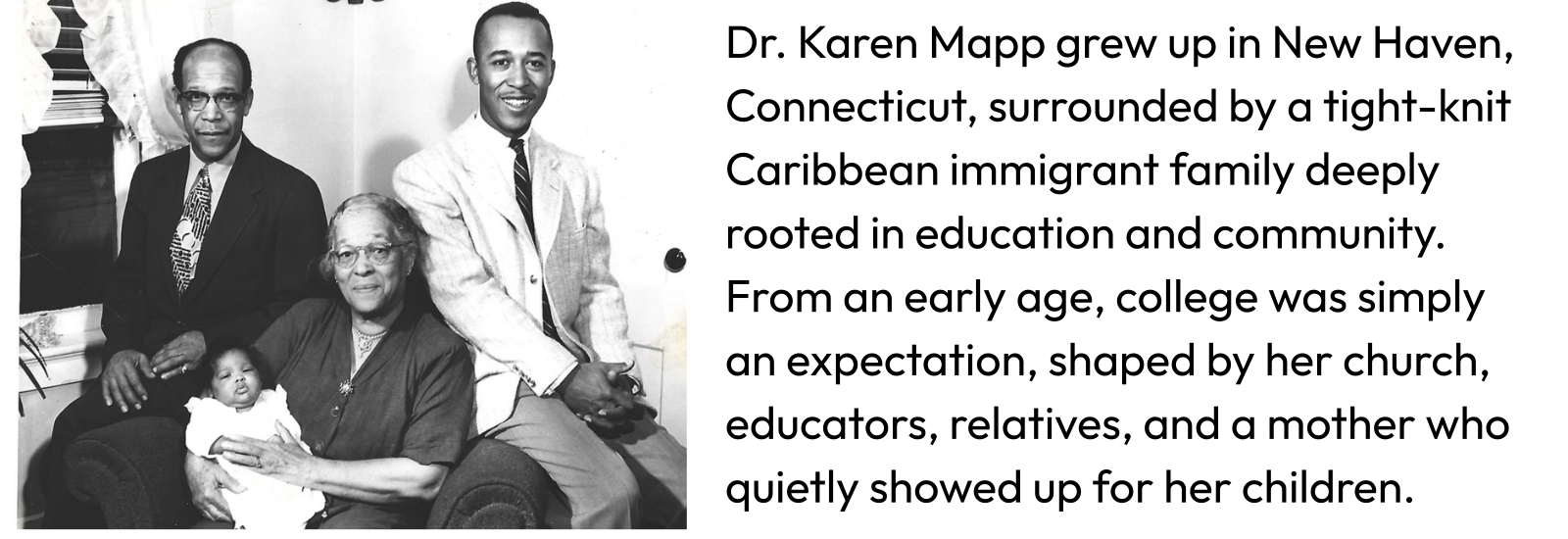
After graduating from Trinity College, she spent nearly a decade at AT&T, growing restless, before the company’s breakup gave her the exit she needed. She took the buyout, earned a master’s degree in counselor education, and headed toward becoming a school counselor—until Trinity College asked her to lead admissions recruitment for students of color and students from lower-income communities.
It turned out to be the perfect fit. As Dr. Mapp talked to teenagers and their families around the country, she noticed something that would define the rest of her career:
A lot of young students of color and students from lower-income communities hadn’t gotten the playbook—the courses they should take to get into college. We’d see these bright, wonderful kids and look at their transcripts, and they’d taken basic math and science. Nobody had told these families about AP courses or anything else beneficial. So I started talking with parents during admissions and asking, “What information do you need?”
That is when I first started to see the difference in schools’ views on families versus the actual reality. The principals of these schools would say, “You’re never going to see these parents. They don’t come to anything.” Then we would go into those communities and have hundreds of parents show up who were eager to find out how they could ensure their child was successful.
I said to myself, “Something is wrong here. There is a disconnect between how these schools perceive families and what the families really are.”
Tapping into Community Energy
Following this revelation, Dr. Mapp decided to pursue a Ph.D. and make this the focus of her dissertation. After graduating from Harvard in 1999, she went to the Institute for Responsive Education and started working with parent organizing groups in Boston. Later, she served as interim deputy superintendent for family and community engagement at Boston Public Schools for eighteen months.
Dr. Mapp: I loved that job. Being able to work with school leaders is what really informed me about the power of working with superintendents and school leaders. If you want to change this work systemically, you have to work with them. That’s the only way it’s going to change in schools and classrooms.
Dr. Chang: Parent empowerment isn’t granted; you have to create the conditions for it. As a leader, your job is to create the conditions for parents to activate it. And if you don’t do it, you’re actually making the work even harder.
Dr. Mapp: Absolutely. One of the people who lived this well was Andrés Alonso, former CEO of Baltimore City Public School System. He used the metaphor of electricity. You go into a community, and you have all this organic electric power around your schools, from the families and from the community. You’re trying to power change. Why try to power that move alone when you can plug into that community’s energy?
The problem is we’re sometimes taught that leadership means being all-knowing and that sharing power with the community is dangerous. That’s just not the case. You need to leverage that energy, but you have to create those conditions.
What Schools Get Wrong about Family Engagement
Dr. Chang: Let’s talk about your research. What are the most common ways schools think they’re doing parent engagement right, but are actually getting it wrong? And what should it look like?
Dr. Mapp: I always talk about the difference between family involvement and family engagement. Larry Ferlazzo, an educator in California, says that schools doing family involvement lead with their mouths. Involvement is the traditional model—talking at families, one-way communication, events like bake sales and festivals, and a PR mentality of keeping the families happy so they don’t bug us.
Larry says that when you’re into engagement, you lead with your ears. You start out with the intent to connect and become partners. We’re forming a bond, because the stronger that bond is, the less likely a child falls through the cracks. Families are learning from us what their child should know and be able to do. We’re learning from families what they know about their child.
Creating Systems and Structures to Unlock the Power of Families
Dr. Chang: What does this work look like beyond the school level? How should a system leader think about creating the conditions for parents to be activated and to be partners in reaching district goals?
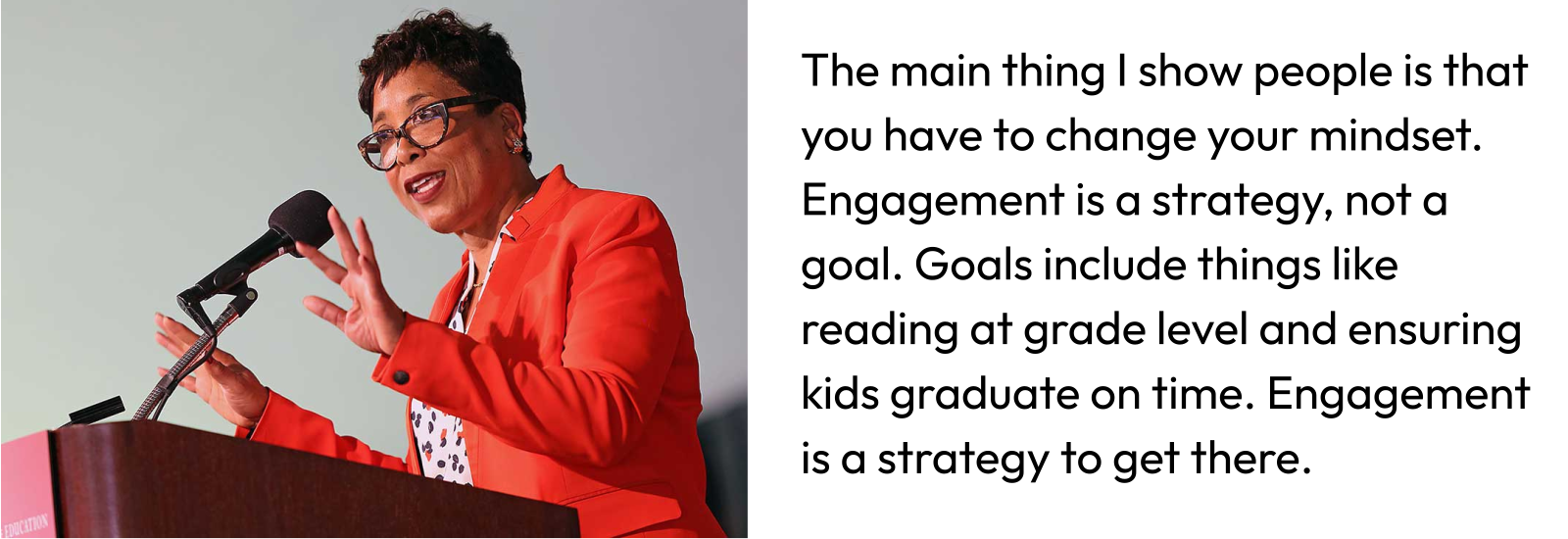
Dr. Mapp: The superintendent and the cabinet have to embrace family engagement as a strategic priority. We’ve seen this in LAUSD with Superintendent Carvalho and in Baltimore City Public Schools under Dr. Santelises. The district has to hear it coming from the central office in both words and actions.
When I joined Boston Public Schools as Deputy Superintendent, I was one of the only cabinet-level people in charge of family and community engagement nationwide. Now there are hundreds. It’s important that the position reports directly to the superintendent so that family engagement remains a strategy toward instructional goals.
We also have to see family engagement reflected not only in the budget, but the schedule. In Baltimore, principals put engagement on the master schedule so teachers have time to call families, write notes, and send texts. The school is providing the time, which signals its importance.
Dr. Chang: As a system leader, you’ve got to create the right structure—situate family engagement leadership in the right place, provide the financial and time resources, and communicate the priority. All is in service of reaching the district goal.
Dr. Mapp: Right. And Tommy, you know that principals want to hit their targets. The last thing they want is to get taken off track. That’s what happens with family engagement: when it’s not linked to learning, school leaders and teachers feel it’s an add-on or just another item on their full plates, not something that can help them.
Dr. Chang: One of the strategies I tried in LA and Boston was using learning walks as a mechanism for parents. When schools are doing instructional rounds, parents would be involved so they could hear the conversations educators were having about the classrooms. That strategy activated parents.
Dr. Mapp: Absolutely. I do a related exercise in all my trainings, whether there are 50 or 5,000 people in the room. First I say, “At your tables, identify three or four academic goals you’re currently working on in your schools.” Then I ask, “If I went around your community and asked families to tell me the goals of your school, would they put down the same things?” And the room goes quiet.
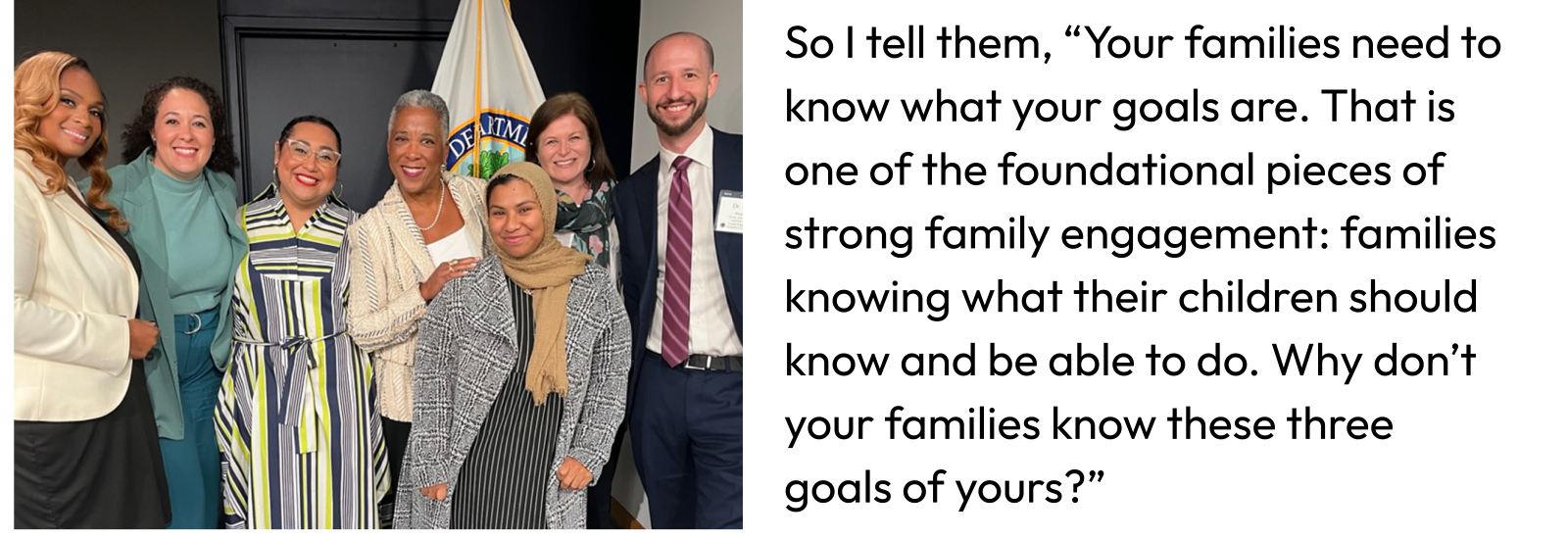
That’s where we start, and that’s where we finish so they leave thinking about strategies for connecting families with that information.
What’s Next for the Field
Dr. Chang: The field of parent engagement has advanced tremendously since Families In Schools started 25 years ago. You have been a massive part of moving this work forward in our country and have helped shape FIS’s work here in Los Angeles. What would be a north star for the next 25 years of this field?
Dr. Mapp: We need to fix higher education’s lousy preparation of educators in family engagement. To do it, we have to change the accreditation standards. We’re working around the country to add proficiency in family engagement to states’ standards because then higher ed institutions will have to teach it.
Even at Harvard, I have my family engagement class, but it’s not required for teachers. I recently spoke to teachers at a conference and asked, “How many of you got a course on family engagement before teaching?” Only two out of 3,000 raised their hands.
We have an abundance of research on the impact. We know the practices need to change from involvement to engagement. The only way to do that is to make sure new teachers, principals, and superintendents have the training.
Dr. Chang: Karen, thank you for your time. You remind me what this work is really about. We entered this conversation, and I was thinking, “Man, we’re in a dumpster fire right now.” But now I feel inspired to jump back into it.
Dr. Mapp: We can do it. We’ve got to stick with it together.