
Honoring Legacy in Leadership: Celebrating Virgil Roberts & 25 Years of Family Power
Families In Schools (FIS) is celebrating its 25th anniversary this year, including a benefit gala on June 3, 2026, that will honor several individuals who embody FIS’s mission. As we lead up to our gala in June, FIS will be releasing one profile every week on each of our gala’s honorees to celebrate their leadership stories and demonstrate how they honor the spirit of their award.
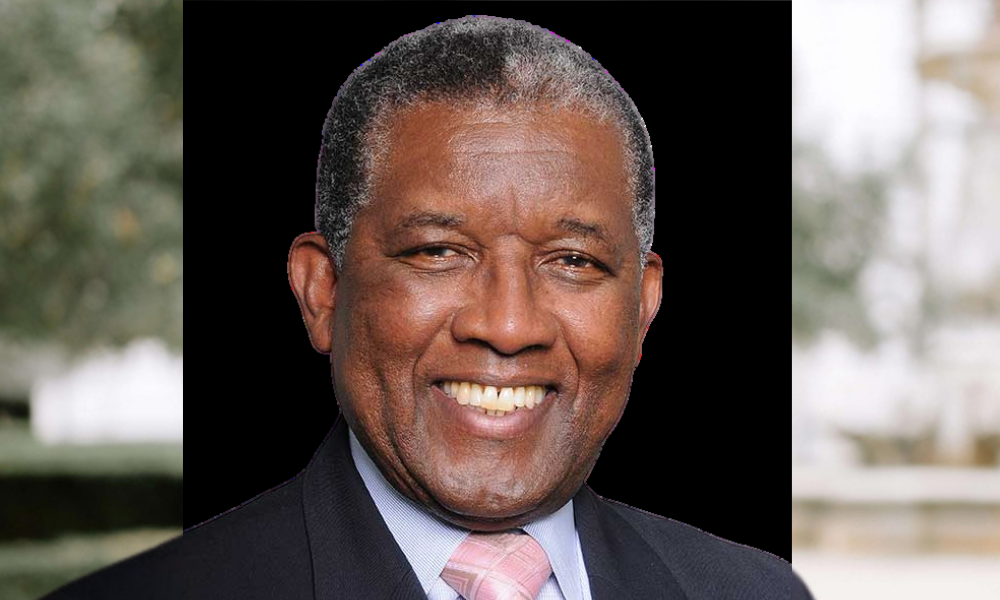
For the second of our award recipients, Families In Schools is honored to present the Legacy in Leadership Award to Virgil Roberts. He is not only one of our founding board members but also one of the longest-serving, having dedicated 25 years to the FIS board. This award celebrates an individual whose leadership has profoundly shaped FIS and strengthened its mission over time. Through vision, service, and unwavering commitment, this honoree has helped build the foundation on which the movement stands, leaving a legacy of courage, integrity, and lasting impact.
“Virgil has always held a strong conviction that continues to resonate across all of FIS’s work—parents are powerful if we support and equip them in being leaders on behalf of their children,” said FIS President and CEO Yolie Flores. “He reminds us that when low-income families are able to have the same agency that more educated and wealthy families bring to their children’s education, that will be the day that the system will change. That’s the work our organization is here to do.”
The Making of a Legacy Leader
Virgil Roberts first witnessed the power of parent leadership when his mother became the first Black PTA president in their majority white town of Ventura, California. Neither of Virgil’s parents, who were sharecroppers from the South, had had the opportunity to finish elementary school themselves, so they prioritized getting their children the quality education they deserved and putting them on the path to success.
“My mother realized how important it was for her to be present on campus, to show her face, and to be an advocate for her children,” said Roberts. “I watched how she made the schools better for me and my brothers, which helped me recognize there’s a power that parents possess that nobody else has.”
When he was eight years old, Virgil learned about Ralph Bunche, a diplomat, political scientist, and civil rights leader who was the first African American to win a Nobel Peace Prize. It was the first time he’d seen a Black person in a professional leadership role, and he looked to him as a role model. Like Bunche, he majored in political science at UCLA and then received an appointment to the U.S. Foreign Service to become a service officer.
In the summer of 1967, Virgil was interning for Voice of America when more than 100 race riots exploded across the U.S., birthing the “Black Consciousness” movement. This historic moment inspired Virgil to stay in the U.S. and switch to studying law.
“I was a student activist at UCLA,” said Roberts, who was part of establishing UCLA’s African American Studies Center and the African American Studies program. “That started my life plan of becoming a lawyer so I could engage more in the community and ensure people of color had equal access to opportunities like education and employment.”
Confronting Educational Injustices Across California
Virgil went on to earn his law degree from Harvard, specializing in Civil Litigation and Entertainment Law. He immediately got to work on civil rights and civil liberties, representing the NAACP in Los Angeles in the 1970s for Crawford vs. Board of Education, a case that led to increased school desegregation efforts in LAUSD. As he witnessed LA communities struggling with homelessness, income inequality, and a lack of healthcare, he saw how much could be solved by giving kids a quality public education.
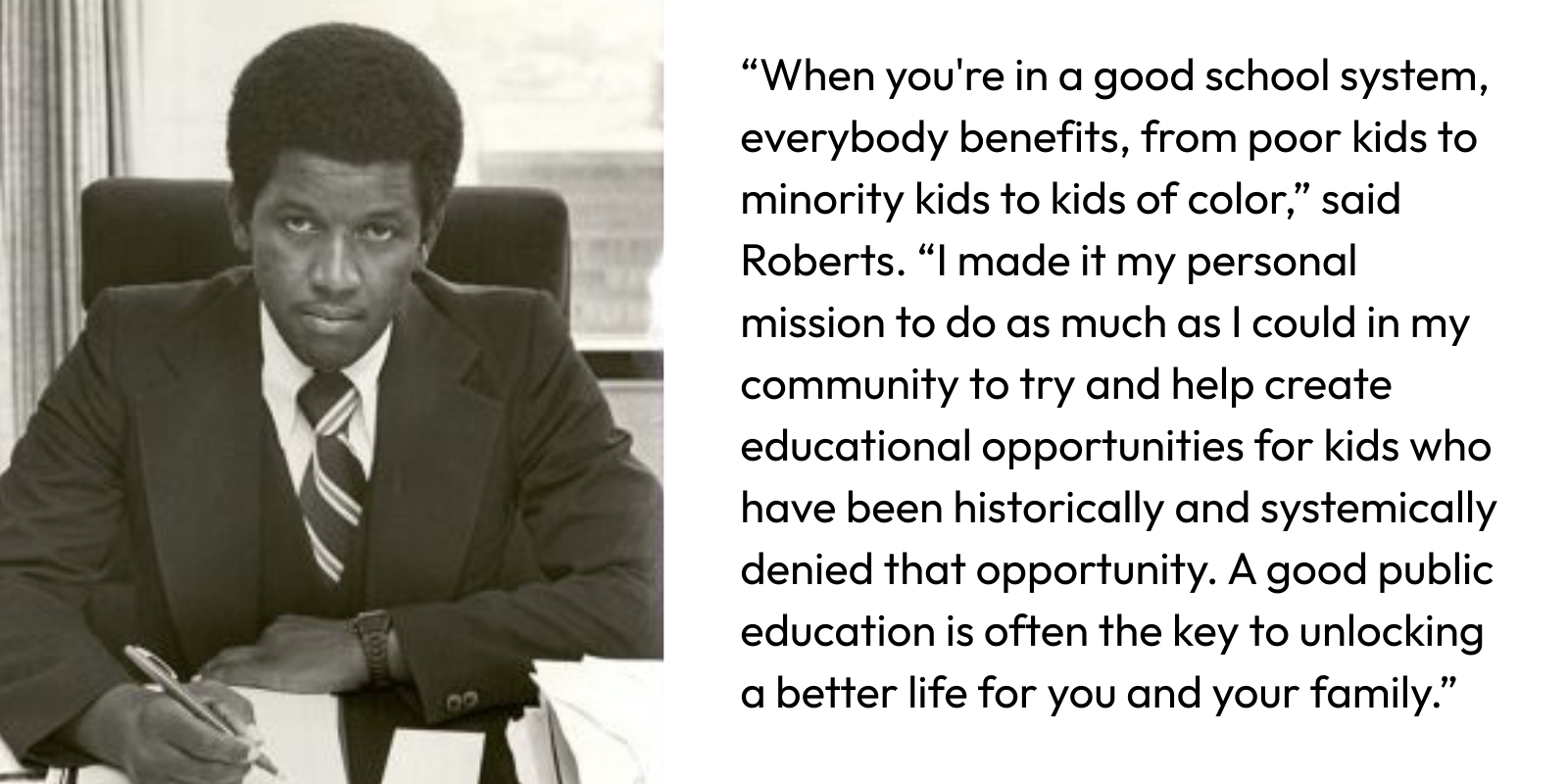
When his own children started school, Virgil saw the power of parents sharing information and leading from each other. He remembered meeting a parent who sent her first grader to school by bus two hours away from their home because she had heard how awful the first grade teachers were at their school on her block. She was only able to seek out and access that opportunity for her daughter because of her connections to other families.
“Parents know what’s going on with their kids, and they absolutely want their kids to get the best education possible,” said Roberts. “What they need is assistance about how they can advocate for their kids. Kids’ first teachers are their parents. Do-gooders come and go, while parents are with their kids for life. If you’re going to create a core of people who are advocates for public education to deliver quality services to kids, you have to engage parents and invest in families.”
The Birth of Families In Schools
Throughout his career, Virgil continued to be deeply engaged in the community. He worked at Solar Records—one of the most successful African American-owned record companies in the 1980s—and formed the law firm of Bobbitt & Roberts, where he represented clients like Usher, Chaka Khan, MTV, and more. He has served on the board of multiple nonprofits, including the California Community Foundation, Southern California Public Radio, the Alliance for College Ready Public Schools, and Los Angeles Annenberg Metropolitan Project (LAAMP).
LAAMP was a major initiative aimed at restructuring LAUSD to improve student achievement that was active from 1995 to 2001. One of the key learnings was that authentic family engagement drives real gains in student achievement. As the initiative concluded, Families In Schools was created as a legacy organization, and Virgil joined as a founding board member.
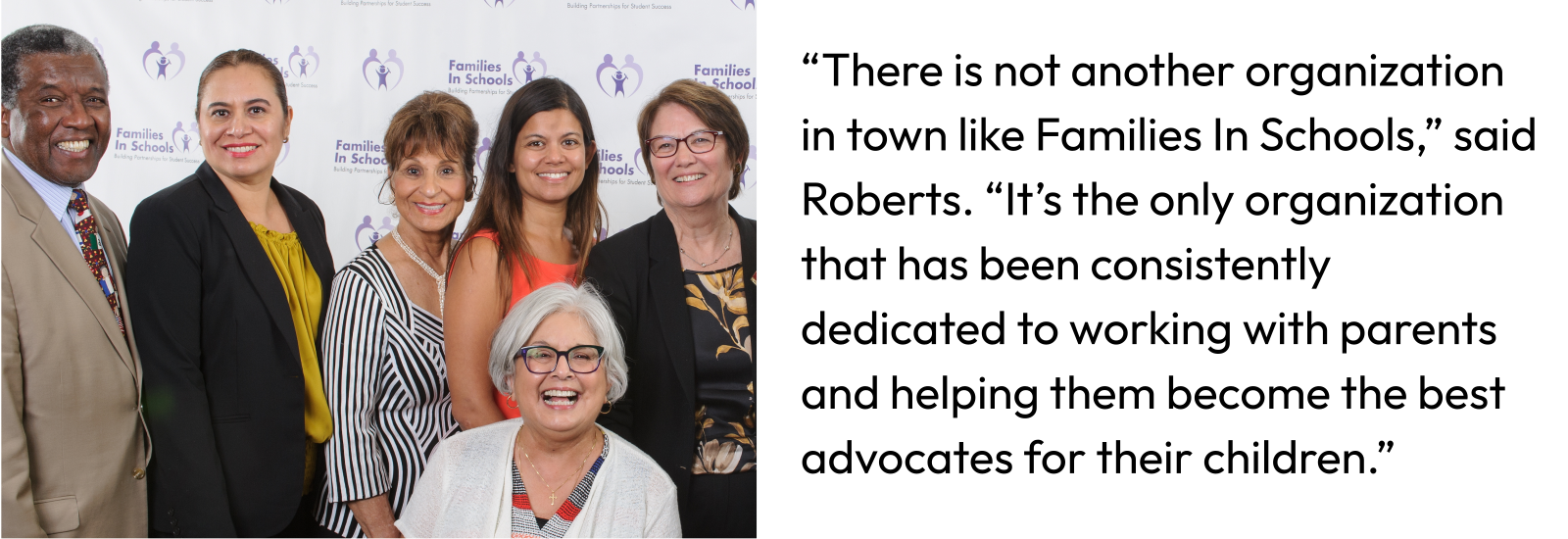
Over more than two decades, Virgil has seen the way school systems have shifted their beliefs and resources around parent engagement.
“When we first started the work, there weren’t family resource centers on most campuses,” said Roberts. “Now it’s accepted policy that, if you’re a well-run school, you’re going to have a center on campus where families can come. I’d like to think that we planted the seeds for how important family engagement is in schools.”
After 25 years, Virgil retired from FIS’s board, leaving behind an incredible legacy of supporting students and families that is the organization’s backbone. As he concluded his service, he shared a message to the next generation of FIS staff and parent leaders.
“You have the resources and the history to continue impacting the education of youth in this city. I hope that you’re still around 25 years from now, doing what’s necessary to ensure that all of our kids get equal access to a quality education.”